

Live Audio

"بیٹیاں بوجھ نہیں، اللہ کی رحمت ہوتی ہیں"
ایک باپ کی چار بیٹیاں ہیں قسمت نے اس کی پہلی بیوی کو اس سے جدا کر دیا، مگر اس آزمائش کے بعد بھی اس کی ذمہ داری ختم نہیں ہوئی تھی۔ افسوس کہ اس نے دوسری شادی کے بعد اپنی ہی بیٹیوں پر ظلم کرنا شروع کر دیا، حالانکہ وہ ننھی کلیاں محبت، شفقت اور تحفظ کی سب سے زیادہ حق دار ہیں۔ یاد رکھو، بیٹیاں اللہ کی وہ رحمت ہیں جو ہر گھر کی رونق اور ہر باپ کے لیے جنت کا راستہ بن سکتی ہیں۔ جو ہاتھ ان کے سروں پر شفقت کے لیے اٹھنے چاہییں، اگر وہی ہاتھ ظلم کے لیے اٹھیں تو یہ صرف بچوں کے دل ہی نہیں توڑتے بلکہ انسان اپنی آخرت بھی خراب کر لیتا ہے۔ دنیا میں طاقتور وہ نہیں جو کمزوروں پر ظلم کرے، بلکہ وہ ہے جو یتیم، مجبور اور بے سہارا بچوں کا سہارا بنے۔ ہر باپ کو سوچنا چاہیے کہ کل اللہ کے حضور اسے اپنی اولاد کے بارے میں جواب دینا ہوگا۔ اور اس شخص کے لیے نصیحت ہے کہ اپنی بیٹیوں کے آنسوؤں سے ڈرو، کیونکہ مظلوم کی آہ اور یتیم دل کی فریاد اللہ کے ہاں بہت وزن رکھتی ہے۔ آج اگر تم انہیں رلاؤ گے تو کل انہی آنسوؤں کا حساب دینا پڑے گا۔ بیٹیوں کو محبت دو، عزت دو، کیونکہ وہ رحمت ہیں، اور رحمت کی قدر کرنے والوں پر ہی اللہ کی رحمت نازل ہوتی ہے۔
بیٹیاں بوجھ نہیں، اللہ کی رحمت ہوتی ہیں
جو باپ اپنی بیٹیوں پر ظلم کرتا ہے، وہ درحقیقت اپنی قسمت، اپنی عزت اور اپنی آخرت خود تباہ کر رہا ہوتا ہے۔
بیٹیاں اللہ کی دی ہوئی نعمت ہیں، انہیں محبت دو، عزت دو اور ان کے آنسوؤں سے ڈرو!کیونکہ مظلوم کی دعا اور بیٹی کے آنسو اللہ تعالیٰ کے ہاں رد نہیں ہوتے۔بیٹیوں پر ظلم نہ کریں، یہی ایک سچے انسان اور ذمہ دار باپ کی پہچان ہے۔"بیٹی کے چہرے پر مسکراہٹ لانا صدقہ ہے، اور اس کی آنکھ میں آنسو لانا قیامت کے دن جواب طلبی کا سبب بن سکتا ہے۔"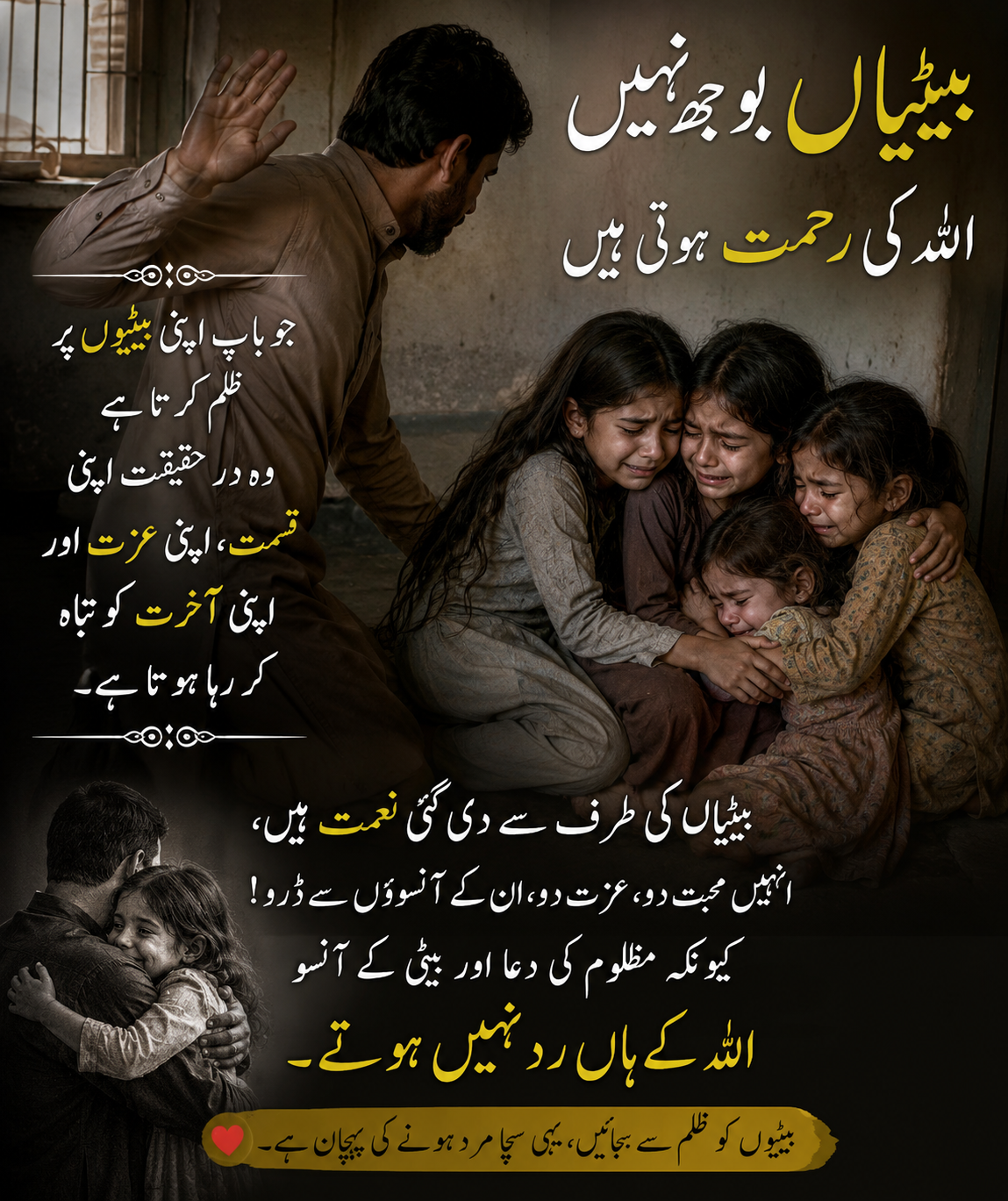

*Title: Earn More Without Quitting Your Job*
Everyone wants extra income, but not everyone can leave their job to chase it. The good news? You don’t have to. You can start earning more right where you are.
*1. Use Skills You Already Have*
Good at writing? Start freelancing on Fiverr/Upwork. Can cook? Sell lunch boxes to office workers. Can fix phones? Do it on weekends. Your skill is your first asset. Don’t wait to “learn something new”. Start with what you know.
*2. Sell Your Time Smartly*
After 9-5, you still have 4-5 hours. Use 2 hours for a side hustle. Teach tuition, manage social media for small shops, do data entry. 2 hours × 30 days = 60 hours/month. That’s a part-time salary right there.
*3. Let Your Money Work*
Save even 2000/month. Put it in a halal investment, mutual fund, or buy stock. Small amounts grow if you’re consistent. Earning isn’t just active work. Passive income is real income too.
*4. Solve Small Problems*
People pay to make life easier. Can you design posters? Make resumes? Edit videos? Start on WhatsApp status, Facebook groups, local market. Your first 3 clients will come from people you already know.
*Bottom Line:*
You don’t need big capital. You need consistency. Start small, stay regular, and reinvest your profit. 1 year from now, that “side income” can become your main income.
Earning more isn’t luck. It’s a decision you make daily.

The Boy Who Borrowed Time
Hamza was always late. Late for school, late for homework, and even late for football practice. One day, while walking home, he met an old watchmaker who handed him a silver watch.
"This watch can give you one extra hour every day," the watchmaker said.
Hamza laughed but took it anyway. The next morning, he pressed a button on the watch, and time froze. Everyone stood still while Hamza enjoyed an extra hour. He finished homework, cleaned his room, and still had time to play.
For weeks, life was perfect. But soon, Hamza started wasting the extra hour too. Instead of studying, he played games. Instead of helping others, he slept. No matter how much time he had, he always found a way to waste it.
One day, the watch stopped working. Panicked, Hamza searched everywhere for the watchmaker but never found him. Without the magic hour, Hamza had to manage his time wisely. Slowly, he learned to plan his day and stop procrastinating.
Years later, he realized something important: the watch had never solved his problem. The problem wasn't a lack of time—it was how he used it.
Moral: Success comes from using time wisely, not from having more of it.**
The Door at the End of the Hall
When Sara's family moved into an old house, she noticed a strange door at the end of a long hallway. The door had no handle, no lock, and no keyhole. Her parents said it had always been there.
Every day after school, Sara checked the door. One evening, she found a sentence written on it in chalk:
"The door opens only for the curious."
Excited, she searched the house for clues. She found old letters, hidden drawings, and a map tucked inside a dusty book. Each clue led to another, like a giant treasure hunt.
After weeks of solving puzzles, Sara finally discovered a small button hidden behind a picture frame. When she pressed it, the mysterious door slowly opened.
Behind it was not a room full of gold or jewels. Instead, it was a library filled with books, inventions, maps, and journals from people who had lived in the house for over a hundred years. Every shelf held stories, ideas, and knowledge waiting to be explored.
Sara spent months reading and learning. She realized the real treasure wasn't money—it was curiosity. The people before her had left their knowledge behind for anyone willing to search for it.
Moral: Curiosity can open doors that stay closed to everyone else.
The Empty Notebook
Ali was the quietest student in class. One day, he found an old notebook on an empty desk. The first page said, "Write a wish, and it will come true." Thinking it was a joke, Ali wrote, "I wish I get full marks in tomorrow's test."
The next day, he got full marks. Shocked, he wrote another wish: "I wish I had a new bicycle." A week later, his uncle gifted him a bicycle. Ali became excited and kept writing wishes. Every wish came true.
One evening, he wrote, "I wish I knew what will happen tomorrow." The next morning, a new page appeared in the notebook. It described everything that would happen that day—and it was correct. Soon, Ali knew every test question, every surprise, and every result before it happened.
At first, it felt amazing. But after a while, nothing was exciting anymore. No surprises, no challenges, no adventures. He realized that knowing everything in advance had made life boring. So he wrote one final wish: "I wish this notebook loses its magic."
The next morning, the notebook was blank. Ali smiled. For the first time in months, he didn't know what would happen next—and that made life interesting again.
Moral: The best part of life is discovering what comes next.


Not age.
test 100 products, you’ll get rich off one
post 100 tweets, you’ll get a banger
life is a number game, take more shots
Pull down to refresh